Stand for Synod
New clergy and lay members are being elected to General Synod this year – and you are invited to stand…

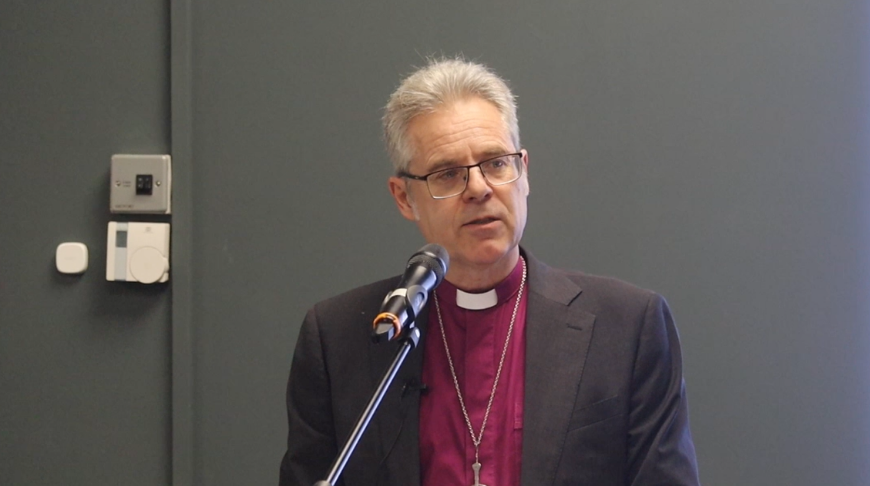
Bishop Rick gave his Presidential Address at Diocesan Synod on Saturday 7 November.
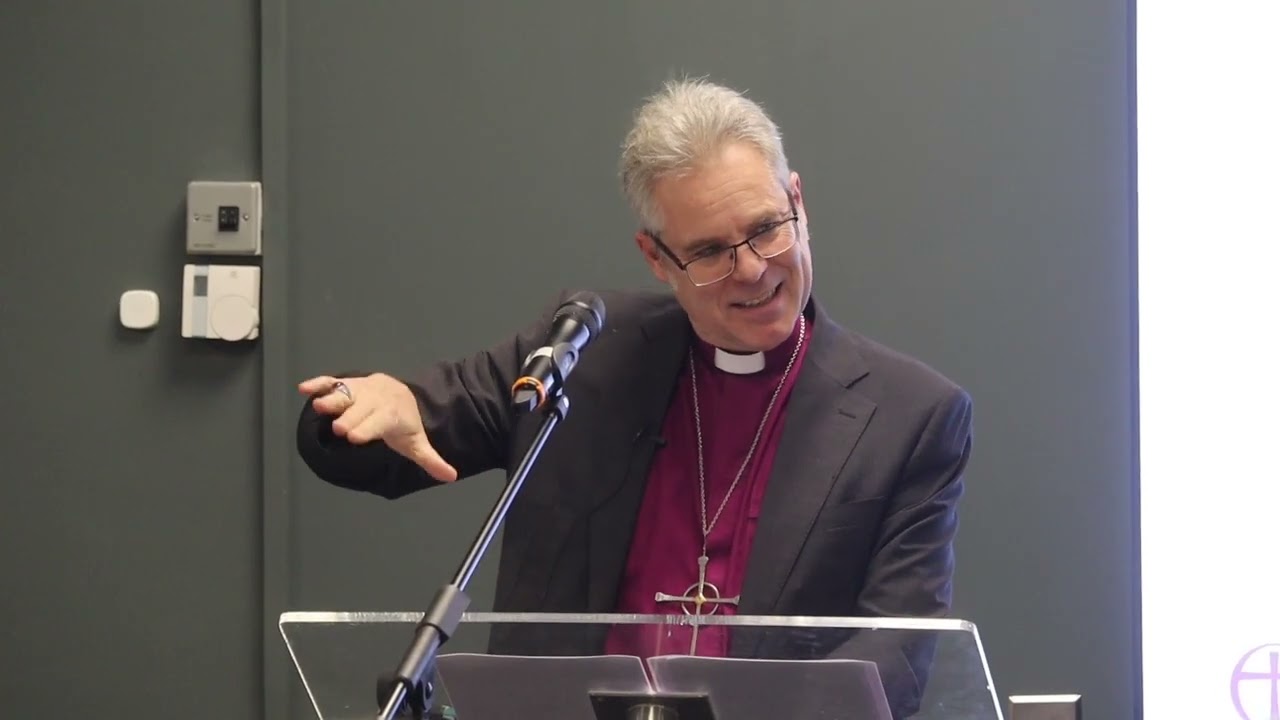
Bishop Rick gave this Presidential Address at Diocesan Synod on Saturday 7 November which took place at The Glow Centre, Newton Ayecliffe. Watch it above or read it below.
See, the former things have come to pass,
Isaiah 42:9
and new things I now declare;
before they spring forth, I tell you of them.
Friends, thank you for being here this morning. For laypeople, this means giving up a valuable part of the weekend. For clergy, it either means deferring the work you would be doing today to later, or this was going to be your day off too! For everyone, thank you for being here.
Thank you, because you could still be in bed with a paper, cheering yourself up by reading about the threats of international, national, economic, environmental and existential crises.
I am reminded of a spoof “address to graduates” in the New York Times in 1979, which began with the words:
More than at any other time in history, mankind faces a crossroads. One path leads to despair and hopelessness. The other, to total extinction. Let us pray we have the wisdom to choose correctly.
Joking apart, we live in scary times, in which we are called to hold out the hope that is found in the gospel.
And that is the real reason we are here, because we care about the mission of the church. No one makes us belong to the church in 2026. It’s a minority pursuit. But we belong, attend, are involved in the ministry of the church, and its maintenance and governance, because we have been called by the risen Lord Jesus Christ to be his disciples, and seek to make disciples of all.
This has never been the easiest possible calling, and in our time has been proving particularly tricky. While being at least nominally Christian has been a cultural default for centuries, and millions have been committed members of Christ’s church, this has ceased to be the case literally just now, mainly in our lifetime. In this context, the transmission of passing faith from one generation to the next in large numbers has largely stopped, and sharing our faith in other ways has proved very difficult. Many of you have heard me speak about these things in the last six months, because I am clear that we have to calmy, openly, without fear or denial, look reality in the face, and resist some overly simplistic explanations of why we are here or how to get somewhere else.
If ever I want to really cheer myself up, I flick through the pages of the Church Times, which not only reminds me how many and seemingly intractable are the challenges we face in the church, but also that we often don’t even agree on what the real causes of our difficulties are, let alone what positive responses to them might be!
Depending on who you listen to, different church initiatives intended to be positive steps towards a better future might instead be just alternatives between despair and hopelessness, or extinction! Let us pray we have the wisdom to choose correctly!
Take, for example, the publication in October of “Wasted Money in a Diminishing Church: A Report on the Church of England” by Robin Gill and John Craven. It has achieved a lot of publicity. They argue that central posts have expanded, with unnecessary things like Bishops and DBF staffs being funded at the expense of appointing parish priests, leading to decline.
There is much I am in sympathy with. I want to see more ministers on the ground in parishes. I believe with hard evidence that good ordained ministry, especially when it can be focussed rather than spread too thinly across multiple churches, can enable churches to thrive, develop fruitful mission and ministry, serve their parishes, and grow.
So far so good. But Gill and Craven don’t explore whether any of the growth in other posts might be necessitated by increasingly complex demands of governance in our world – take for example, least safeguarding. We cannot both be accused as a national church of failing to take safeguarding seriously by not increasing staffing for it and of wastefully increasing bureaucracy by increasing safeguarding posts. As if one path here leads to one bad outcome, and another to something even worse – “let’s pray we choose correctly”!
I Googled for comparison how the number of government civil servants today compares with 1900. It seems there has been growth by a factor of 11 – over 1000%. Is the church immune from some of the same complexities and governance requirements as wider society? I suggest not.
And then the authors simply assert that the growth of central posts is causally related to decline, without exploring the many complex causes of the retreat of the sea of faith, why traditional denominations have declined in every part of the western world, or asking why some denominations are instead growing. Without doing these things, are we recognising and mapping reality? I’m not sure and I think solutions based on this partial analysis need interrogating. They provide numerical data in the appendix on central posts, parish clergy, attendance and giving. However, when one crunches these numbers, there is simply no clear correlation between central posts and decline. Some dioceses with the largest increases in central posts have actually done much better in sustaining or growing. There is no consistent picture which the data supports. Could it be that the reality is instead irritatingly complex, multi-factorial?
Then their solution is to cut central posts and devolve administration to Deaneries. Area Deans, Lay Chairs, I trust are you up for running housing, payroll, and – yes, again – safeguarding? Really? Why ever not?
There is much more that could be said. But I’ve reflected on this because pieces like this can offer beguilingly simple diagnoses of decline and solutions which are distracting and may prevent us seeing what is really going on and what God might call us to do in response.
I do want to see more clergy in parish posts. So do Save the Parish, who have increased their representation in Geneal Synod considerably.
But what is the barrier to more clergy here in Durham? Is it a wicked refusal on the part of the diocese to try to make appointments, when there really is enough money to make many more?
Well, you’re perhaps going to think the Bishop would say this wouldn’t he … but we can indeed only plan for posts we can afford. We will look at the budget next.
And before I carry on with my main theme and conclude, I need to say something about this.
I want us to see clergy numbers sustained, even grow. But of course we can only recruit those we can afford. I still encounter the hazy belief that that there is somehow more money than we will admit, and we can really afford more posts than our income can pay for. That’s just not true.
Yes, there is an increasing debate about the use of the Church Commissioners’ money in grant funding, and how this supports mission and ministry in dioceses. Save the Parish are helping force this debate; Bishops are asking more questions. Synod Reps, you have a role here. I think targeted, grant funding from the Commissioners, who hold most of the churches’ historic resources for us, need to support parish mission more. We benefit greatly from LINC, we are trying to use grant money for projects as well as we can to enable parish mission. I would like to see more.
But while we will keep contributing to this increasingly lively national discussion, we cannot control its outcome. Unless and until there is a dramatic shift here, we have to basically fund parish ministry from Parish Share, supported by LINC.
But our Parish Share numbers make difficult reading this year, with an overall reduction in pledges. What has been pledged would not allow us to fill all the posts for stipendiary clergy we have been budgeting for.
Behind the numbers where parishes are a long way short of their guided pledge lie many different stories. And I get that. In some places PCCs have for years met their guided pledge by using reserves, but the pot is getting empty, and it just can’t be done anymore. Where that’s the reality, bless you for your generosity and we pray for renewal, and growth. In some, particular unforeseen challenges – boilers and roofs among them – have disrupted your planning. I get it. In some, though, there are reserves the PCC will not touch to help make a realistic and generous contribution towards the cost of ministry in their parish. Parish share is based on mutuality – we help one another all to receive ministry. That bond of trust, however, relies upon everyone sharing the load, even when, and especially when, that is costly.
Where a parish’s pledge for next year has been reduced greatly, it would be immensely helpful if the PCC could explain their situation and decision-making by writing to the diocesan secretary, because he wrote to all the parishes individually, and please copy your archdeacon in, so we understand what it is we’re carrying together – it would really help us because this is a relationship.
We are in challenging times. See above! Now, if God is beginning to renew his church, and we are in many places near the bottom of a bell-curve, and on our way out, to better times, and next year’s pledges reflect that, money will not be our main problem. But if they flat-line or reduce further, it really will be, and we will be heading for a diocese with even fewer stipendiary parish clergy, which is not going to help us grow. I just want to be honest about that.
But here’s another thing: we cannot at the moment appoint to the posts we are advertising. The immediate rate-limiting step at the moment is not yet financial, but applicants for posts.
The main reason for that is a national shortage of clergy, and the main reasons for that are decline reduced vocations. If we want to grow some vicars we had better think about how we grow some Christians in the brave new world where we simply don’t get cohorts of young people by default in our churches to try to nurture in faith.
Isn’t this harder? Yes, it is. But this is our reality, a missional situation more like the early church, once again, where faith has to be proclaimed in a largely unbelieving world, and less like Christendom, where Christianity was normal until you opted out. It’s a massive change in short time. We need to change so that we can proclaim the faith afresh in this situation, not another one which we might prefer to imagine still exist but doesn’t.
To paraphrase the NYT from 1979: like many other times in history, the church faces a crossroads. But I don’t think it’s true that all possible paths lead to an equally bad place.
Or can we instead forge other paths, which perhaps will turn out to be ancient ways rediscovered?
Well, you know that I believe we can.
In every place I visit I ask church members if they will join with me in praying daily that God would renew the churches and worshiping communities of the diocese of Durham by the work of the Holy Spirit.
Last week I wrote to ask all our worshipping communities if they would use or adapt one of three prayers for growth in worship and in key meetings.
And many of you will have heard me say that I think one of the Church of England’s national strategic goals describes the shift we need to make very succinctly – not simply, or simplistically, but succinctly.
While the church of Christendom enabled millions to be adherents, worshippers, attenders, it was very poor in most places at helping every Christian see that they are a disciple, with gifts from God, and a vital part to play in enabling the church to be the church and participate in God’s mission. The church of Christendom let the curate catechize the kids, the vicar preach to the adults, and only very gradually encouraged lay ministry. It was often poor at helping every member of the body learn to articulate their faith even to fellow Christians, let alone to others. But that was OK, because the curate and vicar got a crack at nurturing a Sunday school full of children, and enough stayed to replicate church.
This is now over. In our smaller church we are rediscovering the truth that every member really is indispensable and are called to share in mission. Missionary disciples know that they are called to live out their faith, share it where possible, put it into action in acts of loving service and prophetic witness. This is a healthier theology of church, mission and discipleship, and in our context only this will do: churches just hoping people will come back are, I think, in denial and on an unwisely chosen path; churches of missionary disciples, committed to making other missionary disciples, in obedience to Christ’s call, may enable a new, post-Christian generation to come to living faith and themselves come to participate in God’s mission.
I believe that we need to be very intentional about, creating, offering, opening spaces where children, young people and adults can explore and find faith.
Where those things are happening I hear the stories of people walking into churches saying they’re not sure why they are there, but know they need to find God. I meet those people. I have been confirming some in recent weeks.
I believe there is an increased Spiritual hunger in our time. I long for God to renew his church, so that disciples of Jesus are engaged in mission in hundreds of different ways. We need to be a diocese made-up of churches of missionary disciples, and I will work and pray for this goal. Thank you for all that you do as part of God’s mission and ministry in schools, chaplaincies, churches and worshipping communities. May God take and use our witness, in our time, to do his work in and through us.
New clergy and lay members are being elected to General Synod this year – and you are invited to stand…
In his first Presidential Address to Diocesan Synod on 16 May 2026, Bishop Rick reflects on the profound changes shaping…
Read Bishop Sarah's full Presidential Address, given at Diocesan Synod on Saturday 8 November, below (or watch above). This morning…
Here is Bishop Sarah, on behalf of Bishop Paul, giving the Presidential Address at Durham Diocesan Synod on 13…